The Handshake Before the Photograph
The handshake before the photograph can suggest welcome, agreement, or ceremony. Read the surrounding details to understand the image without overclaiming.
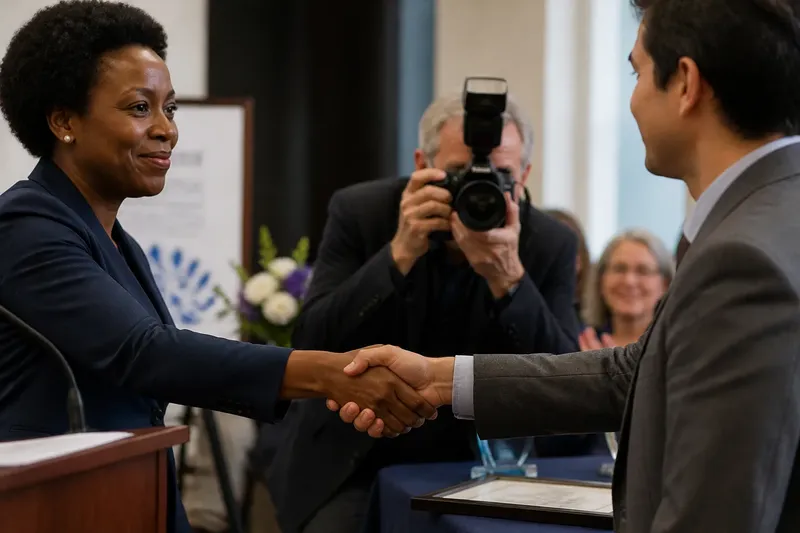
At a reception, one person reaches across a table just as the photographer raises a camera. That handshake before the photograph may be a greeting, a pose, or part of a public announcement; the clasp alone cannot tell you which. Read the setting, the timing, and what the people say before deciding what the image means.
What can a handshake before the photograph show?
A handshake is both an action and an image. In person, it may greet someone, acknowledge an arrival, or accompany a formal occasion. In a photograph, the gesture becomes a compact symbol viewers may read as cooperation, respect, introduction, or simply a moment arranged for the lens.
That apparent clarity has limits. A clasp does not establish that the people trust one another, agree on every detail, or chose the gesture without prompting. It shows that they took part in a recognizable public ritual. Their expressions, the photographer’s framing, and nearby objects—a contract, podium, or reception sign—shape what viewers can reasonably infer.
In an official image, the handshake can give visible form to an encounter that might otherwise seem abstract: a host greeting a visitor or colleagues marking an occasion. The same gesture can also look routine, awkward, or imposed. Its meaning comes from the exchange and its context, not from the hands alone.
Which kind of encounter does the scene suggest?
Is this a first meeting or a receiving line?
A handshake may serve as an introduction, acknowledging people in turn and making a welcome visible. The sequence can matter: who offers a hand, who is introduced, and who is included may suggest the event’s social order.
A posed photograph might freeze one greeting and use it to stand for a longer reception. A host’s outstretched hand beside a welcome sign gives a different impression from two visitors shaking hands over a signed document.
Is the photograph marking an agreement?
A handshake beside paperwork or at a negotiating table may suggest that an agreement has been reached. It can publicly signal recognition between the people pictured, but it does not reveal every term or either person’s private view.
Timing and surrounding details help distinguish a courtesy from a ceremonial marker. A handshake before paperwork is complete may express goodwill or intent; one after an announcement may serve as a public seal. The commitments themselves belong to the words and records, not the image alone.
Is the handshake mainly for the camera?
A photographer may ask people to repeat a greeting or hold it briefly for a clear image. The pose then records a public presentation of accord, not necessarily the spontaneous instant of meeting.
Both people facing outward, a centered backdrop, or a still, camera-ready clasp can suggest staging. That does not make the image meaningless; it indicates that the participants or organizers wanted the encounter seen in a particular way.
Does someone seem unable or unwilling to join in?
An offered hand that is not taken can become the image’s central message, whether or not that was intended. People may greet differently because of custom, comfort, disability, health, or personal preference, so a still frame is not enough to judge motive.
Describe what is visible before interpreting it: one person’s hand is extended, and the other person is not clasping it. That distinction helps prevent a brief image from becoming an unsupported claim about character or intent.
How do custom and context shape the greeting?
The handshake belongs to a broader family of greetings: bows, nods, embraces, spoken welcomes, and gestures that preserve more distance. Expectations vary across communities and occasions, including who initiates, how long a greeting lasts, and whether a handshake feels appropriate in a formal setting.
Public photographs can bring people with different customs together. They may show participants using a shared convention, or reveal pressure to follow the convention favored by event organizers. A photograph can present the gesture as natural while leaving those choices outside the frame.
A greeting and an agreement are related possibilities, not interchangeable meanings. A handshake can welcome someone without implying a commitment, and an agreement can exist without a handshake. Look for the event’s purpose, accompanying words, and whether the image captures an unposed encounter or an arranged moment.
What questions help you read the image?
Does a handshake prove that an agreement was made?
No. It may mark an agreement publicly or suggest mutual recognition, but the image does not establish the terms. Look for documents, announcements, or other context before treating the pose as evidence of a specific commitment.
Why do people pose while shaking hands?
The pose gives a photograph a recognizable image of contact and cooperation. It may stand for a greeting or formal occasion, even if the camera asked participants to hold the gesture.
What if someone declines to shake hands?
Respect another greeting without turning the choice into a public spectacle. A nod, spoken welcome, or mutually comfortable response can acknowledge the meeting while using a different visual convention.
How can you tell whether the handshake is staged?
Participants facing the camera, a centered backdrop, or a clasp held for the lens may suggest a posed image. Such clues do not reveal whether the people welcomed the pose or what they privately felt.
How can you choose a greeting when the camera is ready?
Let the people and occasion guide the greeting rather than treating the camera as a demand for a particular gesture. If you know someone’s preference, respect it. If you do not, a friendly verbal greeting and open posture leave room for them to respond comfortably.
Say you are at a community award event, and an organizer asks you to greet a guest for a photograph. You say hello and pause. The guest offers a hand, so you shake it, then turn toward the camera. The visible result is a greeting that began with mutual participation. If the guest does not offer a hand, your pause leaves space for a nod or spoken welcome instead.
When a handshake is welcome, keep the moment brief and attentive. Acknowledge the photographer without pulling anyone into a pose. If the image is meant to document an agreement, make sure the surrounding context—not the clasp alone—identifies what was agreed.
When interpreting someone else’s photograph, separate what it shows from what it might suggest. The handshake before the photograph can signal welcome, formality, or public accord, but a still frame cannot supply the whole conversation, private intentions, or customs the participants brought into the room.
What details remain outside the frame?
A handshake makes a meeting easy to picture. It can compress arrival, recognition, and sometimes agreement into one visible act, helping viewers see why people were brought together. But that compactness can flatten differences in custom or make a ceremonial moment appear more conclusive than it was.
Ask what occasion called for the gesture, whose convention shaped it, and what the surrounding scene supports. A document, announcement, or greeting sequence may clarify the moment; if those details are absent, keep your interpretation modest. And when you are in the photograph, a respectful pause can communicate welcome just as clearly as an offered hand.